Diagnose first. Buy second.

Practical home troubleshooting before you replace what might be fixable.

Start with the symptom, isolate the likely causes, and use source-backed checks to decide whether the answer is cleaning, adjustment, repair, or replacement. When buying is the right move, our product guides explain fit and tradeoffs without pretending we tested what we did not.

Affiliate disclosure: Some buying guides contain Amazon affiliate links. Troubleshooting guidance is not paid for, and a commission does not decide whether repair or replacement is recommended.

Featured troubleshooting

Problems worth diagnosing before replacement.

Start with original field work from this house: a pre-service inspection of the AC, hydronic boiler, and gas water heater, plus the photographed Whirlpool oven repair. Then explore source-backed troubleshooting guides.

Crown hydronic boiler photographed during a homeowner pre-service inspection

Original field inspection

What I Found Inspecting My AC, Boiler, and Water Heater Before Annual Service

I photographed the accessible parts of three working home systems before their next service visit, recorded what looked normal, found one real maintenance item, and stopped where professional service made more sense.

Whirlpool oven bake burner with an even blue flame after the igniter replacement

Hands-on gas oven repair

Whirlpool Oven Igniter Glows but Won't Heat: A Hands-On Repair

The igniter glowed orange, but the bake burner did not reliably light. This documented repair shows the diagnosis, OEM part, connector mismatch, and successful final test.

Window air leak troubleshooting

How to Stop Drafts From Windows Without Replacing Them

Find the leak path first. A draft at a moving sash needs a different repair than a gap behind stationary trim.

Bathroom fan troubleshooting

How to Fix a Noisy Bathroom Exhaust Fan

The sound is a symptom. Dust, loose hardware, a damaged blower wheel, worn bearings, a stuck damper, and restrictive ductwork do not make the same noise.

The method behind the guides

A maintenance troubleshooting process you can reuse.

My electromechanical and industrial maintenance work taught me to preserve the evidence, separate a system into functions, and choose tests that rule causes in or out before replacing parts. I wrote that process down for homeowners, including a printable worksheet and a worked example from my Whirlpool oven repair.

Our editorial standard

Useful guidance begins with the diagnosis.

01

Confirm the symptom

Describe what is actually happening before assigning a failed part or a replacement product to it.

02

Isolate the system

Separate mechanical, electrical, airflow, moisture, installation, and control problems when the same symptom could come from several causes.

03

Repair before replace

Cleaning, adjustment, a serviceable component, or a corrected installation belongs ahead of replacement when it solves the actual problem safely.

04

Source the technical claim

Government guidance, recognized industry organizations, manufacturer documentation, and current specifications anchor the facts. Our interpretation is labeled as judgment.

When buying is the answer

Product analysis connected to the problem.

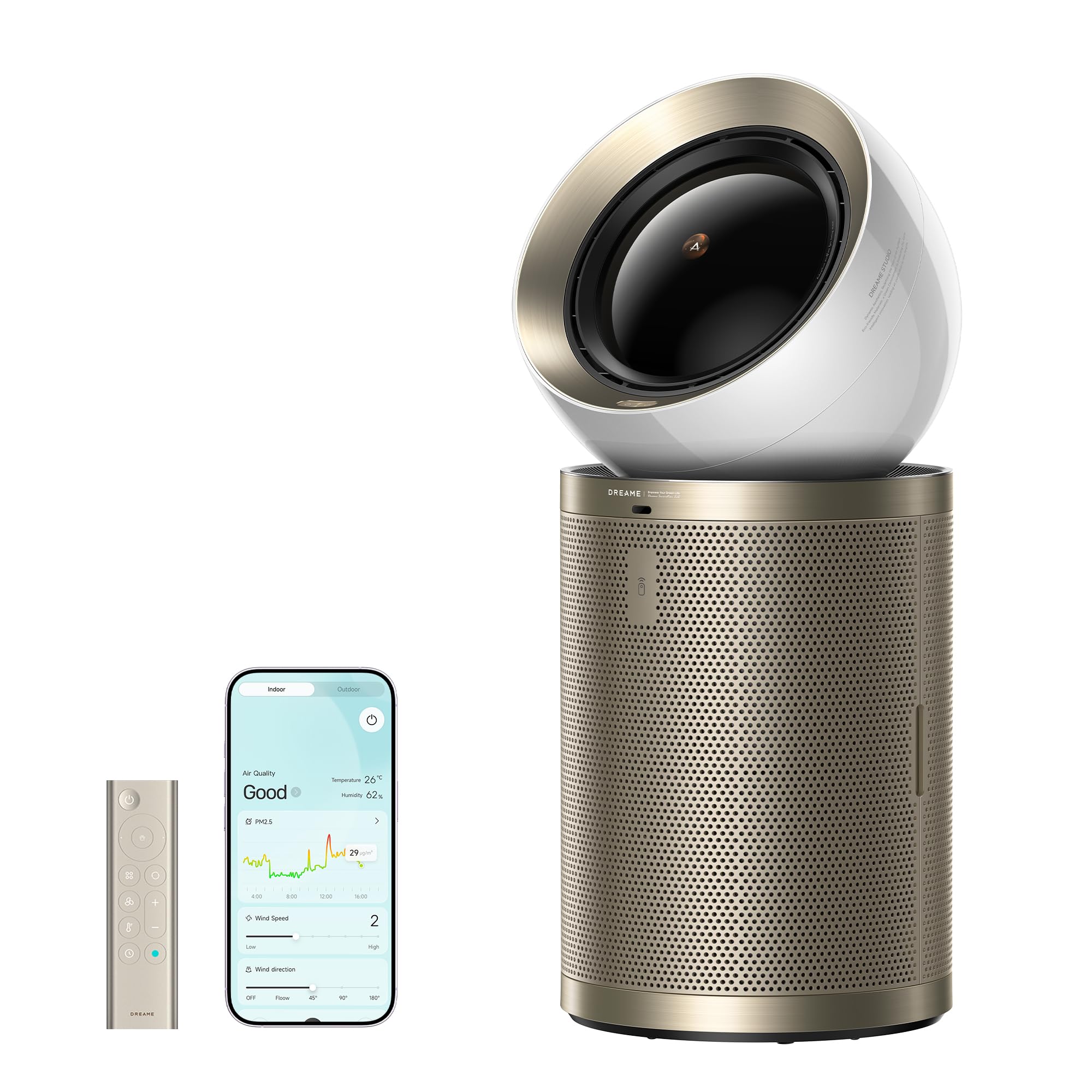
Compare the Dreame PM20's published clean-air delivery rate with your room volume. The guide works through the sizing math and explains the tradeoffs of combining a purifier, fan, and supplemental heater.

Dreame AirPursue PM20 air purifier, fan, and heater

Indoor air

Dreame AirPursue PM20

The PM20's published 400 m³/h particle CADR converts to about 235 CFM. That is substantial clean-air airflow for a portable purifier, but CADR is more useful for sizing than a headline square-foot claim. Using the U.S. EPA's current CADR sizing table as a reference, 235 CFM falls between the 300 square foot and 400 square foot entries, which is roughly a 360 square foot reference at an 8 foot ceiling by interpolation. In a 300 square foot room with an 8 foot ceiling, the same CADR is about 5.9 equivalent air changes per hour. In 500 square feet, it is about 3.5.

Best fit
A roughly 300 to 500 square foot living area where particle filtration matters and the combined purifier, directed airflow, sensors, and supplemental heat are useful.
Skip if
You are choosing mainly from the largest square-foot coverage headline, need a high equivalent air change rate across a very large open area, or want a simpler purifier with lower complexity and potentially lower ownership cost.
  • 400 m³/h, which converts to about 235 CFM
  • About a 360 sq ft reference at an 8 ft ceiling by interpolating the EPA CADR table
  • About 5.9 eACH at 300 sq ft, 3.5 at 500 sq ft, and 1.8 at 1,000 sq ft with 8 ft ceilings
1original diagnostic method
8curated troubleshooting resources
0invented hands on tests

Stay in touch

Questions, corrections, and future guides.